
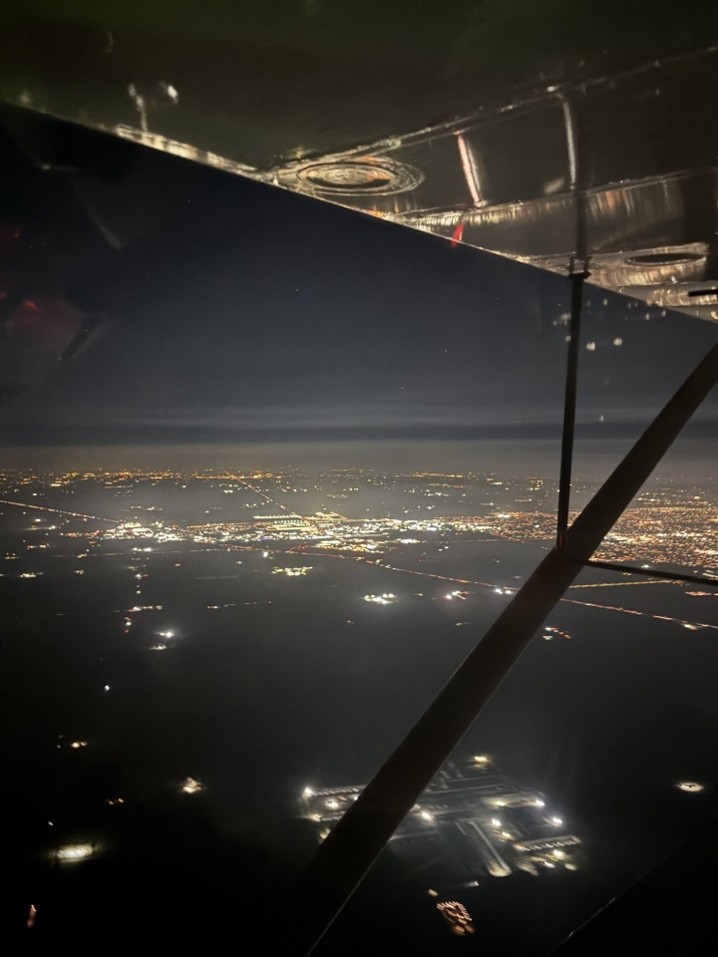
NIGHT PROFICIENCY
Make night flying deliberate and familiar.
Refresh the visual, operational, and risk-management skills that make night flying comfortable beyond simply meeting currency requirements.
Night currency is not the same as night proficiency.
Night flying changes the visual environment, reduces outside cues, increases dependence on instruments, and can make weather, terrain, and mechanical problems less forgiving. This session is designed to rebuild comfort with those differences through practical discussion and flight experience.
We focus on making night operations predictable: preparing before departure, maintaining orientation, using lighting and instruments effectively, recognizing visual illusions, and keeping conservative options available.
You’ll work on
- Night takeoffs and landings
- Airport and runway lighting
- Visual illusions and spatial orientation
- Night navigation and situational awareness
- Instrument cross-check at night
- Emergency and diversion planning
- Aeromedical and fatigue considerations
- Night-specific risk management
Who it’s for
Pilots returning to night flying after time away, pilots who technically meet currency requirements but do not feel comfortable at night, and pilots preparing for trips that will involve significant night operations.
How the session works
We begin with a short review of night physiology, illusions, weather, lighting, route planning, and emergency considerations. The flight then emphasizes takeoffs, approaches, landings, navigation, instrument cross-check, and practical scenarios appropriate to the pilot’s experience.
Go beyond checking the currency box.
Build the confidence and decision-making habits you want before the next night trip.

