
TAILWHEEL ENDORSEMENT
Learn real stick-and-rudder flying.
Build directional control, precise landing technique, stronger coordination, and the judgment to manage a tailwheel airplane confidently on the ground and in the air.
WHY TAILWHEEL TRAINING?
Sharper aircraft control starts on the runway.
Tailwheel airplanes demand active directional control from taxi through rollout. The training develops disciplined rudder use, coordinated control inputs, precise energy management, and a better feel for what the airplane is doing at low speed.
Those skills transfer well beyond the endorsement. Pilots often leave tailwheel training with better crosswind technique, stronger landing judgment, and a deeper understanding of aircraft control.
At a glance
- FAA minimum time: none specified
- Completion standard: proficiency plus instructor endorsement
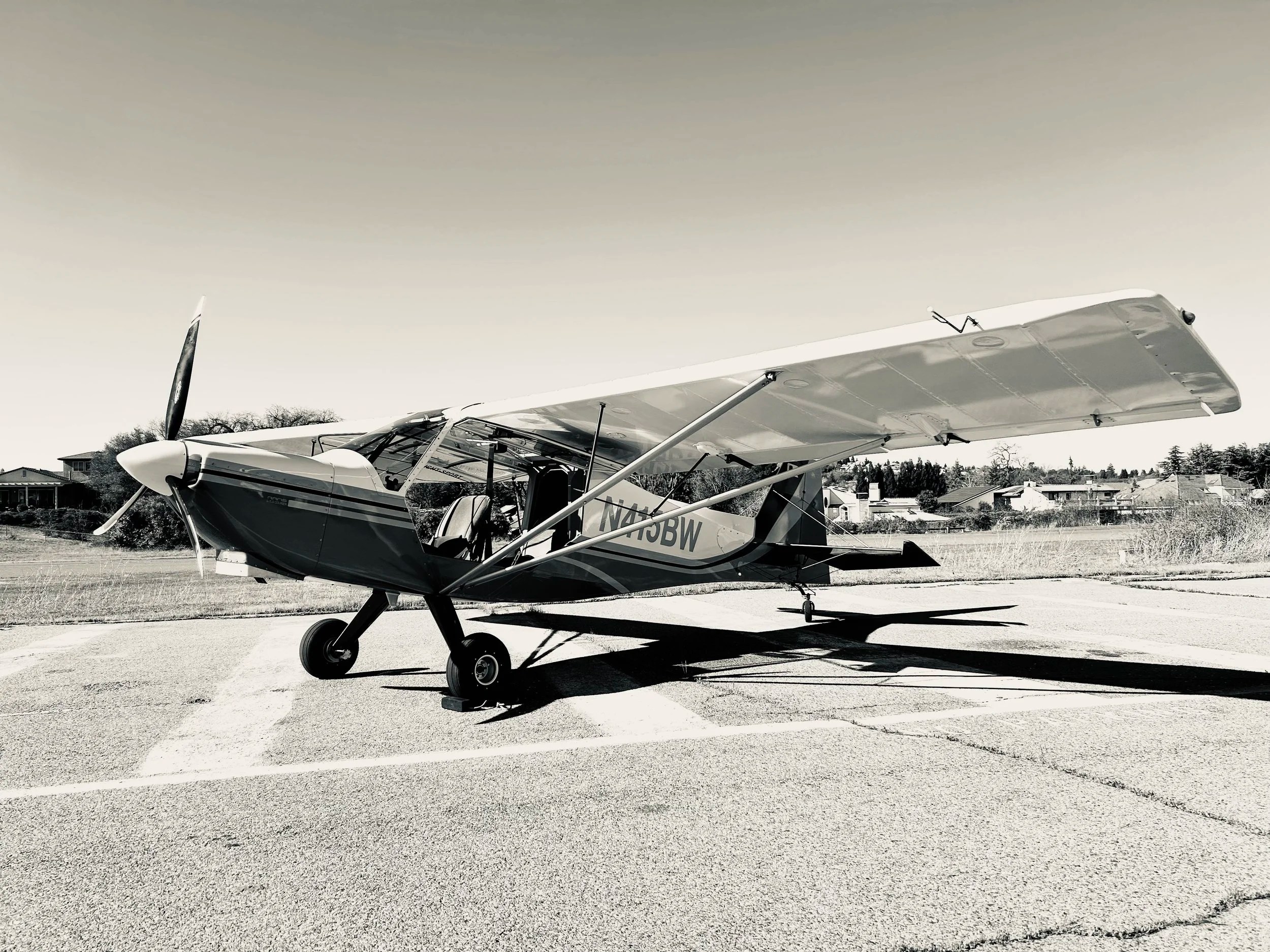
- Featured aircraft: RANS S-7LS Courier
- Aircraft rate: $165/hour wet
- Instruction: $100/hour
- Planning budget: approximately $3,200
FAA ENDORSEMENT REQUIREMENTS
The endorsement is based on proficiency—not a fixed number of hours.
Under 14 CFR § 61.31(i), a pilot acting as pilot in command of a tailwheel airplane must receive and log flight training from an authorized instructor and receive a logbook endorsement showing proficiency in tailwheel operations, unless the regulatory exception for qualifying prior tailwheel PIC experience applies.
Normal & crosswind operations
Training includes normal and crosswind takeoffs and landings with emphasis on alignment, rudder control, drift correction, and maintaining directional control throughout the ground roll.
Wheel landings
The FAA requires wheel-landing training unless the aircraft manufacturer recommends against the maneuver. You will learn the pitch control, touchdown attitude, and rollout technique that make wheel landings useful and repeatable.
Go-around procedures
Go-arounds are part of the required training and an important judgment skill. The goal is to recognize an unstable landing early and transition smoothly back to a safe climb without sacrificing directional control.
FAA reference: 14 CFR § 61.31(i). The regulation specifies required training and proficiency but does not establish a minimum number of flight hours for the endorsement.
THE TRAINING PROGRAM
A progressive five-stage path to tailwheel proficiency.
Foothill’s tailwheel program builds one layer of control at a time. Training is individualized, so each stage continues until you can apply the skill consistently rather than simply complete a predetermined number of repetitions.
01
Introduction to tailwheel
Aircraft handling, taxi technique, control positioning, sight picture, directional stability, takeoff fundamentals, and the differences that matter when the center of gravity sits behind the main gear.
02
Three-point landings
Approach control, flare timing, touchdown attitude, centerline discipline, aerodynamic control positioning, and maintaining directional control throughout deceleration.
03
Wheel landings
Control the touchdown attitude, place the main wheels precisely, manage pitch as speed decreases, and transition safely from aerodynamic control to ground handling.
04
Crosswind operations
Develop better wind awareness, drift correction, runway alignment, control positioning, and judgment about when conditions are appropriate for your skill level and the airplane.
05
Short- & soft-field operations
Apply precise airspeed, energy, and directional control to short- and soft-field situations while refining takeoff, landing, and go-around decisions.
Download the Tailwheel Endorsement Training Syllabus v1.0 (PDF)
FEATURED AIRCRAFT
Train in the RANS S-7LS Courier.
The RANS S-7LS Courier is Foothill’s dedicated tailwheel trainer. Its conventional landing gear, responsive controls, excellent visibility, and straightforward handling make it an effective platform for developing the sight picture, coordination, and directional-control habits that tailwheel flying demands.
The airplane rents for $165 per hour wet. Instruction is $100 per hour.
RECOMMENDED BUDGET
Plan approximately $3,200.
Tailwheel training is proficiency-based, so actual time can vary with previous experience, frequency of training, weather, and individual learning pace. For planning purposes, Foothill’s syllabus-based estimate uses approximately 10.5 flight hours and 4.0 hours of ground instruction.
Current planning rates
RANS S-7LS:
$165/hour wet
Flight or ground instruction:
$100/hour
Syllabus-based planning model
- Aircraft: 10.5 hours × $165 = $1,732.50
- Flight instruction: 10.5 hours × $100 = $1,050
- Ground instruction: 4.0 hours × $100 = $400
- Estimated training total: $3,182.50
For simple planning, we recommend budgeting approximately $3,200. This is an estimate rather than a fixed-price package or guarantee; some pilots will require more or less training before reaching endorsement proficiency.
WHO SHOULD TAKE THIS TRAINING?
For endorsement applicants—and pilots who want stronger fundamentals.
This course is designed for pilots earning their first tailwheel endorsement, but it is equally valuable for already-endorsed pilots who want to rebuild proficiency, improve crosswind technique, sharpen landing accuracy, or become more comfortable operating conventional-gear airplanes.
Skills you’ll develop
- Taxi and ground handling
- Rudder discipline and directional control
- Three-point landings
- Wheel landings
- Crosswind takeoffs and landings
- Short- and soft-field technique
- Go-around judgment
- Recognition and correction of developing directional-control problems
Ready to improve your stick-and-rudder skills?
Tell us about your flying experience and training goals. We’ll build a tailwheel training plan around your current proficiency and help you work toward consistent, confident aircraft control.

