
AEROBATIC TRAINING
Explore the airplane’s envelope—with purpose.
Build precision, coordination, energy management, orientation, and recovery skill through a structured introduction to fundamental aerobatic maneuvers.
WHY AEROBATIC TRAINING?
Learn to manage attitude, energy, and load factor deliberately.
Aerobatic training exposes the relationships between pitch, roll, yaw, airspeed, angle of attack, and load factor more clearly than routine flight. You learn how control inputs affect energy and flightpath through large attitude changes—and how to recognize when a maneuver is no longer developing as planned.
The objective is not simply to perform figures. It is to develop orientation, aircraft feel, disciplined setup, sound continue-or-discontinue decisions, and reliable recovery habits that make you a more capable pilot.
At a glance
- Program: five progressive flight lessons
- Ground / discussion: approximately 3.0 hours
- Flight training: approximately 5.0 hours
- Aircraft: Citabria 7ECA and Decathlon 8KCAB
- Instruction: $100/hour
- Planning budget: approximately $1,800
SAFETY & FOUNDATIONS
Every maneuver starts with margins.
The first lesson establishes the habits that make aerobatic training safe and repeatable: aircraft limitations, weight and balance, inspection, parachute fit and egress, weather and airspace, clearing, entry speeds, minimum recovery altitudes, G-load awareness, fatigue, motion sickness, and emergency procedures.
Energy management
Understand how altitude, airspeed, pitch, load factor, and power trade against one another so you can plan each figure with a usable energy margin and recognize when the airplane is running out of options.
Orientation & sight picture
Learn to use outside references, wingtip position, horizon movement, and attitude cues to stay oriented through large pitch and roll changes instead of chasing the instrument panel.
Recovery discipline
Practice nose-high, nose-low, unusual-attitude, stalled, low-energy, and botched-maneuver recoveries so that an imperfect figure becomes a controlled recovery rather than a cascading problem.
THE TRAINING PROGRAM
Five flights that build from fundamentals to a short sequence.
Each lesson adds one layer of complexity while preserving the same priorities: clear the area, establish safe entry conditions, fly the maneuver within aircraft and personal limits, and recover with adequate altitude and energy.
01
Aerobatic foundations & safety
Aircraft and pilot readiness, parachutes and egress, energy management, accelerated stalls, maximum-performance turns, unusual-attitude recovery, wingovers when approved, and botched-maneuver recovery.
02
Aileron rolls
Learn entry conditions, pitch-and-energy setup, the pitch–unload–roll–neutralize–recover sequence, rudder coordination, heading control, and recovery from an incomplete or unsatisfactory roll.
03
Inside loops
Develop smooth entry pull, circularity, pitch-rate control, wing-level discipline, load-factor management, and recovery from low energy, asymmetry, roll-off, or an approaching accelerated stall.
04
Barrel rolls & maneuver combinations
Refine pitch-and-roll coordination, barrel-roll geometry, wind correction, positioning, and the energy planning needed to safely combine two or three maneuvers.
05
Spin awareness, recovery & course review
Review stall/departure recognition, incipient-spin recovery, spin entry and recovery when approved, unexpected-attitude recovery, selected maneuver review, and a learner-planned short sequence with energy and risk assessment.
TRAINING AIRCRAFT
Train in the Citabria or Decathlon.
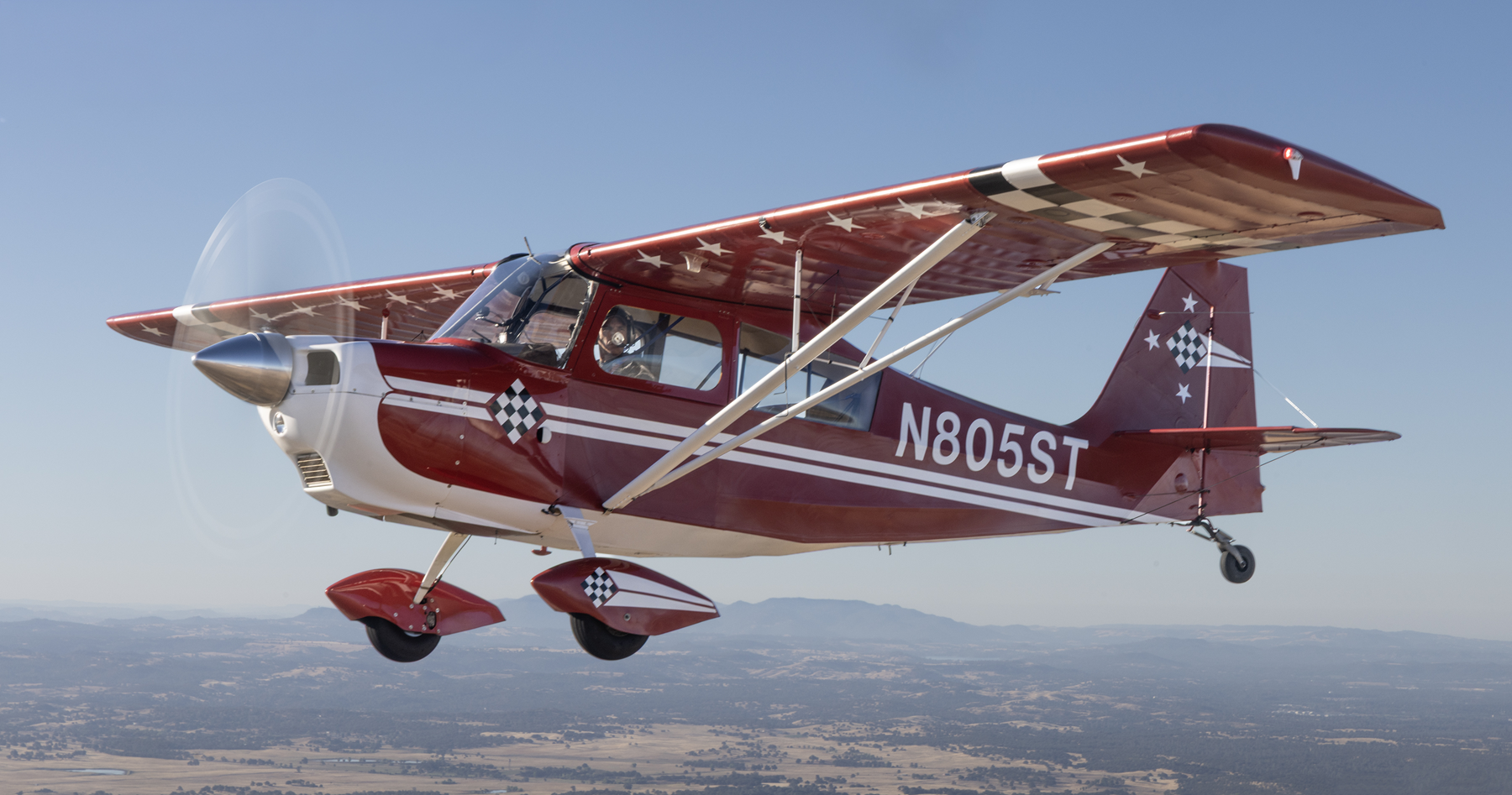
Foothill uses the Bellanca Citabria 7ECA and Bellanca Decathlon 8KCAB for aerobatic instruction. Both are two-seat aerobatic tailwheel airplanes that provide excellent outside visibility, direct control feedback, and a training environment well suited to learning fundamental figures and recovery skills.
The Citabria rents for $175 per hour wet, and the Decathlon rents for $185 per hour wet. Flight and ground instruction are $100 per hour.
RECOMMENDED BUDGET
Plan approximately $1,800.
The introductory syllabus includes approximately 5.0 hours of flight training and 3.0 hours of ground or preflight discussion. Actual time and cost can vary with aircraft choice, previous experience, weather, and individual proficiency, so this is a planning estimate rather than a fixed-price package.
Current planning rates
Citabria 7ECA:
$175/hour wet
Decathlon 8KCAB:
$185/hour wet
Instruction:
$100/hour
Syllabus-based planning model
- Citabria option: 5.0 × $175 = $875 aircraft
- Decathlon option: 5.0 × $185 = $925 aircraft
- Flight instruction: 5.0 × $100 = $500
- Ground / discussion: 3.0 × $100 = $300
- Estimated total: $1,675 in the Citabria or $1,725 in the Decathlon
For simple planning, we recommend budgeting approximately $1,800. Additional flights can be added for maneuver refinement, sequence development, or continued aerobatic training.
WHO SHOULD TAKE THIS TRAINING?
For pilots who want more than routine aircraft handling.
This course is designed as an introduction to aerobatics, but it is equally useful for pilots who want to improve coordination, orientation, energy management, recovery confidence, or aircraft-control precision before moving into more advanced aerobatic training.
Skills you’ll develop
- Aerobatic safety and preparation
- Energy and load-factor management
- Outside-reference orientation
- Maximum-performance turns and stalls
- Unusual-attitude recovery
- Aileron rolls
- Inside loops
- Barrel rolls
- Spin awareness and recovery
- Short-sequence planning and execution
- Botched-maneuver recovery
Ready to explore aerobatics?
Tell us about your flying experience and goals. We’ll build an introductory aerobatic plan that emphasizes safety, understanding, precision, and confidence from the first maneuver onward.

